

Giving Educational Scholarships: Lasting Goo

Giving Educational Scholarships: From Immediate Aid to Lasting Impact
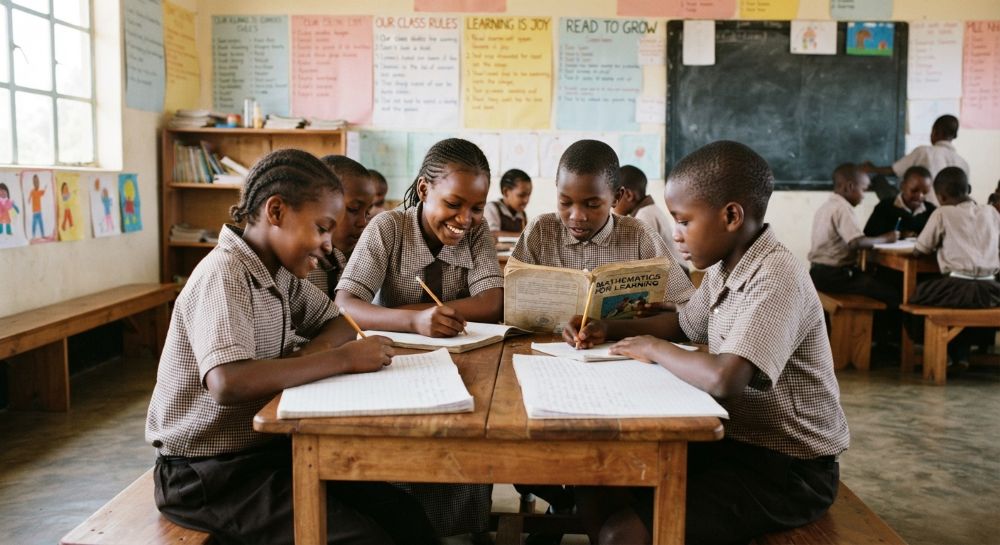
Helping people in need is often associated with responding to urgent problems. Food, clean water, emergency assistance, and other forms of relief can provide meaningful support when circumstances are difficult. However, lasting humanitarian work also asks a broader question: how can today’s support contribute to stronger opportunities tomorrow? Giving educational scholarships is one way to approach this question. It can help students continue their education while creating opportunities that extend beyond a single moment of assistance. In this context, Hilf Al-Fudul Foundation connects immediate humanitarian support with a wider understanding of dignity, opportunity, and sustainable service.
Why Sustainable Aid Matters
First, humanitarian needs can take many forms. Some require an immediate response, while others develop over time. Emergency aid can address urgent needs, but education, access to resources, and community support can also influence a person’s future opportunities.
For this reason, sustainable aid should not be understood as replacing emergency assistance. Instead, it can complement immediate relief by addressing needs that require longer-term attention. A balanced humanitarian approach recognizes both realities.
Moreover, sustainable support can encourage continuity. A single act of generosity may solve an immediate problem. A continuing program, however, can create a more stable form of assistance. This is particularly relevant in education, where students often need consistent support to remain focused on their studies.
Hilf Al-Fudul Foundation works across more than 12 countries and supports people regardless of religion, language, or race. Its humanitarian work includes water well projects, Qurbani initiatives, educational scholarships, and emergency aid campaigns. Therefore, its approach can connect immediate humanitarian needs with opportunities that support human dignity over time.
Giving Educational Scholarships as Lasting Support
Giving educational scholarships can be a meaningful form of long-term humanitarian support. Education does not simply provide knowledge. It can also help individuals develop skills, pursue professional goals, and participate more actively in their communities.
For example, a talented student may have the motivation and ability to continue studying but struggle with tuition or other education-related costs. Without appropriate support, financial pressure may affect the student’s ability to remain in education. An educational scholarship can help reduce this barrier and give the student greater room to focus on learning.
At the same time, scholarship support should be approached with respect. Students should not be defined by their financial circumstances. They are individuals with aspirations, abilities, responsibilities, and personal goals. Therefore, humanitarian communication should focus on opportunity rather than portraying beneficiaries through hardship alone.
In this context, scholarship support can represent more than financial assistance. It can express a commitment to creating meaningful educational opportunities while respecting the dignity and privacy of those receiving support.
From a Single Donation to a Culture of Continuity
A donation can begin with a simple intention: to help someone facing a genuine need. However, consistent giving can create a broader culture of support.
For example, donors may choose to contribute regularly to educational programs rather than supporting only one immediate campaign. This approach can help humanitarian organizations maintain continuity in their work. In turn, students may have access to more stable educational support.
Furthermore, sustainable humanitarian work can involve different types of assistance. A water well project may respond to the need for access to clean water. A Qurbani campaign may provide support during a particular time of year. Emergency aid can respond when urgent circumstances arise. Giving educational scholarships, meanwhile, focuses on an area where progress often develops gradually.
These forms of assistance are not necessarily alternatives. Rather, they can represent different responses to different needs. A comprehensive humanitarian approach recognizes that communities may require both immediate relief and longer-term opportunities.
Education, Dignity, and Opportunity
Education deserves particular attention because it is closely connected to personal development. A student who receives an education scholarship is not simply receiving financial assistance. The support can help preserve an opportunity to continue learning.
However, scholarship programs should always be presented realistically. An educational scholarship does not guarantee a particular career, income, or life outcome. Instead, it can remove or reduce one financial barrier that may otherwise make education more difficult.
This distinction matters. Humanitarian communication should offer hope without making promises that cannot be guaranteed. It should recognize the value of education while respecting the complexity of each individual’s circumstances.
In addition, education can be supported through different forms of assistance. These may include financial support, access to learning opportunities, and encouragement to continue academic development. Each form of support can contribute to a more sustainable approach when implemented responsibly.
The Role of Donors and Volunteers
Sustainable humanitarian work also depends on people who choose to participate. Donors provide financial resources that allow organizations to continue their programs. Volunteers can contribute their time, skills, and energy.
For donors, regular giving can be one way to support continuity. A recurring contribution may help sustain programs over time rather than focusing only on individual moments of need. However, every donor can choose an approach that fits their circumstances.
Likewise, volunteering can strengthen humanitarian initiatives in ways that go beyond financial contributions. People may contribute professional skills, organizational support, communication abilities, or practical assistance.
As a result, humanitarian work becomes more than a single transaction. It can become a shared culture of responsibility, compassion, and service.
A Humanitarian Approach Built on Respect
Hilf Al-Fudul Foundation places its humanitarian work within an inclusive framework. The foundation stands with people in need without discrimination based on religion, language, or race.
This principle is important when discussing sustainable aid. Humanitarian support should focus on genuine needs while preserving the dignity of every person involved. It should avoid language that reduces people to their circumstances or presents assistance as a measure of their worth.
For this reason, responsible storytelling matters. A general scenario can explain why giving educational scholarships matters without revealing private information about beneficiaries. Instead of creating dramatic stories, humanitarian communication can show how financial barriers may affect access to education and how responsible support can help address those barriers.
In the same way, transparency should remain central to communication. Donors deserve clear information about the purpose of a campaign and the type of support being provided. Trust grows when humanitarian organizations communicate responsibly and avoid exaggerated claims.
Building a More Lasting Culture of Giving
In conclusion, humanitarian support can respond to today’s needs while also creating opportunities for tomorrow. Emergency aid remains important when people face urgent difficulties. At the same time, education and other forms of long-term support can contribute to continuity and opportunity.
Giving educational scholarships is one practical way to support this broader vision. It can help students continue their education while treating them as individuals with potential, goals, and dignity. Likewise, sustainable aid can encourage donors and volunteers to view humanitarian service as an ongoing commitment rather than a single moment.
Hilf Al-Fudul Foundation carries out water well projects, Qurbani initiatives, educational scholarships, and emergency aid campaigns in more than 12 countries. Through these different areas of work, humanitarian support can address immediate needs while also keeping the value of long-term opportunity in focus.
Donate today or volunteer your time and skills to support meaningful humanitarian work: /make-a-donation/ and /become-volunteer/


