

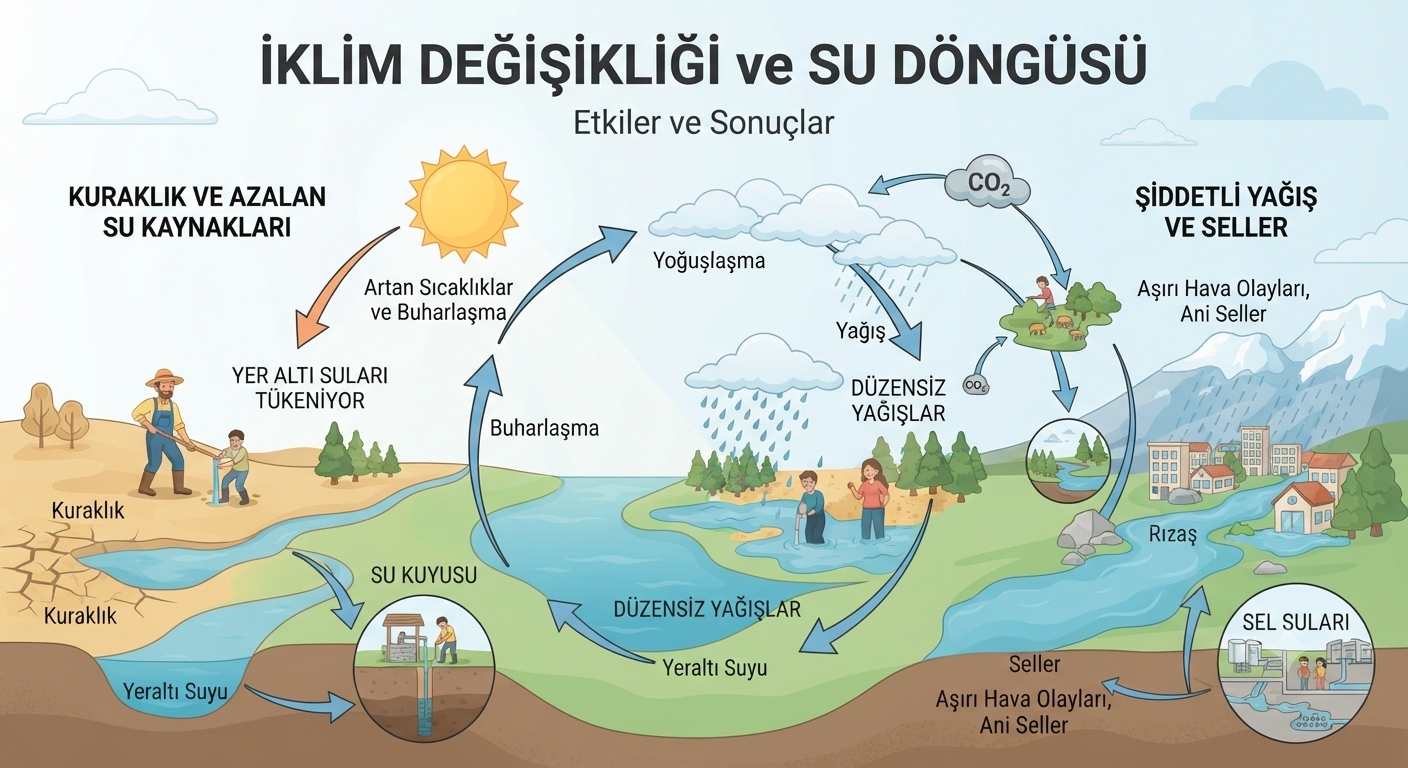
Climate change and water scarcity affect communities in deeply connected ways. Changing rainfall, droughts, floods, and rising temperatures can disrupt access to safe water. Therefore, vulnerable communities often face several pressures at the same time. Sustainable aid can help communities strengthen access to water while supporting long-term resilience. Additionally, responsible water projects can connect humanitarian support with local needs. Hilf Al-Fudul Foundation supports humanitarian initiatives that seek practical and lasting benefits.
How Climate Change Affects Water Resources
Climate change changes how water moves through natural systems. Rainfall patterns can become less predictable across many regions. Some communities experience longer dry periods and reduced water availability. Others face intense rainfall that can cause floods and contamination. These changes can place additional pressure on already limited water infrastructure. UN-Water describes climate change as a major driver of worsening water scarcity. It also links climate impacts with less predictable and more polluted water resources.
Water scarcity does not always mean that water disappears completely. Instead, communities may struggle to access safe and reliable sources. A water source may become harder to reach during prolonged drought. Flooding can also contaminate wells and other water infrastructure. Consequently, families may need to travel farther for usable water. Such changes can affect health, education, household responsibilities, and livelihoods. The effects often become more serious where infrastructure already faces limitations.
Why Water Scarcity Becomes a Humanitarian Issue
Water scarcity affects much more than drinking habits. Families also need water for cooking, cleaning, hygiene, and basic household activities. When reliable sources become distant, people spend more time collecting water. Women and girls often carry a significant share of this responsibility. UN-Water notes that water scarcity can increase collection burdens for women and girls. It can also interfere with education and economic opportunities.
Imagine a rural family living several kilometers from a reliable water source. A parent may need to spend part of the morning collecting water. A child may also help with this responsibility before school. During a drought, the journey may become longer and more uncertain. The family then has less time for school, work, and household activities. This example shows why water access connects directly with wider development goals. It also explains why humanitarian water projects require thoughtful planning.
Sustainable Aid and Long-Term Water Access
Short-term relief can respond to immediate needs during emergencies. However, communities also need solutions that support resilience over time. This is where sustainable aid becomes especially important. Sustainable support considers local conditions, available resources, and future risks. It does not treat water access as an isolated problem. Instead, it connects water with health, education, livelihoods, and community resilience.
A well project can offer an important water access point for a community. Yet the quality of the project depends on appropriate planning and local conditions. Teams must consider factors such as groundwater availability and community needs. They should also consider maintenance and long-term usability. Responsible humanitarian work therefore requires more than installing infrastructure. It requires attention to what happens after a project becomes operational.
How Sustainable Aid Can Support Water Projects
Effective water initiatives should respond to real community needs. They should also consider environmental conditions and future challenges. This approach helps humanitarian organizations use resources responsibly. A thoughtful sustainable aid model can include several important principles:
- Assess local water needs before planning a project.
- Consider climate and environmental conditions.
- Prioritize safe and reliable water sources.
- Involve communities in relevant decisions.
- Consider maintenance and long-term functionality.
- Communicate clearly about project goals and progress.
- Monitor challenges that may affect continued access.
These principles can help turn a simple water intervention into a broader resilience effort. They also encourage organizations to think beyond immediate project completion. Sustainable humanitarian work asks whether a solution can continue serving people effectively. That question matters especially in communities facing changing environmental conditions.
Climate Change, Clean Water, and Public Health
Safe water plays a central role in protecting public health. Contaminated drinking water can transmit diseases such as cholera and diarrhoeal illnesses. Climate-related floods can also damage water infrastructure and contaminate water resources. Droughts create different risks by reducing available sources and increasing pressure on existing supplies. The World Health Organization connects climate change with growing risks to water and sanitation systems.
The WHO reported that 2.2 billion people lacked safely managed drinking-water services in 2022, the same data included people using limited services, unprotected wells, or untreated surface water. These figures show why water access remains an important global development challenge.
Clean water also supports everyday hygiene. Families need sufficient water for handwashing, food preparation, and cleaning. Better access can reduce the time people spend collecting water. It can also support school attendance and economic activity. For children, these benefits can influence daily routines and longer-term opportunities.
The Connection Between Water and Education
Water scarcity can affect children’s education in several ways. Some children help their families collect water before or after school. Long collection journeys can reduce time available for studying. Water shortages can also create hygiene challenges within schools. These pressures can make regular attendance more difficult.
The relationship works in the opposite direction as well. Better water access can create conditions that support regular school attendance. Families can spend less time searching for usable water. Children can devote more time to lessons, homework, and rest. For this reason, water projects can contribute to educational outcomes indirectly.
A water well cannot solve every educational challenge. However, it can remove one practical barrier facing some communities. This distinction matters when discussing humanitarian work. Responsible communication should explain realistic benefits without promising outcomes. Sustainable aid works best when organizations connect projects with broader community needs.
Why Climate-Resilient Water Planning Matters
Climate change makes water planning more complex. A water source that works today may face different pressures in the future. Rainfall patterns can shift, while droughts may become more severe in vulnerable areas. Flooding can also threaten infrastructure and water quality. UN-Water emphasizes the importance of sustainable water management for climate resilience.
Organizations therefore need to consider local climate risks before developing water projects. They should understand how communities currently access water. They should also consider environmental factors affecting long-term availability. This approach helps reduce the risk of creating solutions that cannot meet future needs.
Climate-resilient planning also requires cooperation. Local communities understand their circumstances and daily challenges. Humanitarian organizations contribute technical knowledge and project experience. Donors provide resources that make projects possible. Together, these elements can support more responsible water interventions.
The Role of Donation in Water Projects
A donation can help humanitarian organizations develop water initiatives in communities facing serious shortages. Yet donors deserve clear information about how organizations use their support. Transparency helps create trust between supporters and humanitarian organizations. It also encourages more responsible approaches to charitable giving.
Before making a donation, supporters can consider several questions:
- What water needs does the project address?
- Does the project reflect local conditions?
- How does the organization approach project sustainability?
- How does the organization communicate project progress?
- Does the project consider long-term community needs?
These questions do not diminish the value of generosity. Instead, they encourage informed and meaningful giving. A responsible donor can support humanitarian work while also considering its long-term purpose. This approach reflects the principle behind sustainable aid.
Why Volunteering Also Matters
Humanitarian support involves more than financial contributions. Volunteering can also strengthen awareness and community engagement. Volunteers can help share accurate information about water challenges. They can support awareness campaigns and encourage responsible participation. They can also help humanitarian organizations communicate their mission more widely.
Volunteering creates another important connection between communities and humanitarian initiatives. People can contribute time, skills, creativity, or professional knowledge. These contributions can support organizations beyond individual campaigns. They can also help more people understand why clean water remains a global priority.
For Hilf Al-Fudul Foundation, humanitarian work reflects a commitment to supporting people without discrimination based on religion, language, or race. Water initiatives form part of a wider approach to humanitarian assistance. The goal remains practical support that respects human dignity and community needs.
Water Wells and a More Resilient Future
Water wells can provide an important source of clean water for communities. Their value depends on careful assessment, appropriate implementation, and continued attention. A well should respond to genuine local needs rather than simply represent a completed project. This distinction separates short-term activity from meaningful humanitarian planning.
Climate change makes this distinction even more important. Water resources face pressures from drought, flooding, changing rainfall, and growing demand. UN-Water notes that climate change can make water more scarce, unpredictable, and polluted.
For this reason, water projects should form part of broader resilience thinking. Sustainable aid can help connect immediate humanitarian support with longer-term community priorities. It can encourage organizations and donors to consider what happens beyond project completion. Most importantly, it can place people and their real needs at the center.
How Hilf Al-Fudul Foundation Approaches Water Support
Hilf Al-Fudul Foundation works across more than 12 countries through humanitarian initiatives. Its activities include water wells, emergency assistance, education support, and Qurban projects. Water initiatives represent one part of a broader humanitarian commitment. The Foundation seeks to support people regardless of religion, language, or race.
The connection between climate change and water scarcity requires cooperation. Humanitarian organizations cannot address every environmental challenge alone. Communities, donors, volunteers, institutions, and responsible partners all have roles. Donation can provide resources, while volunteering can strengthen participation and awareness.
Ultimately, water support should focus on people rather than infrastructure alone. A well matters because it can improve access to an essential resource. It can support healthier routines and reduce some burdens of water collection. It can also contribute to conditions that support education and livelihoods. These benefits make responsible water projects an important part of humanitarian action.
Conclusion: Supporting Water Access Through Sustainable Aid
Climate change and water scarcity increasingly influence one another. Droughts, floods, changing rainfall, and water contamination can create serious challenges. Vulnerable communities often experience these pressures with fewer resources available. Sustainable aid offers a way to think beyond temporary relief. It encourages responsible planning, community participation, transparency, and long-term resilience.
Water wells cannot resolve the entire global water crisis. However, carefully planned projects can address concrete needs in specific communities. They can also become part of wider efforts supporting health, education, safety, and dignity. A thoughtful donation can contribute to these efforts. Likewise, volunteering can help build awareness and strengthen humanitarian solidarity.


