

Education Support: Stories That Inspire the Future

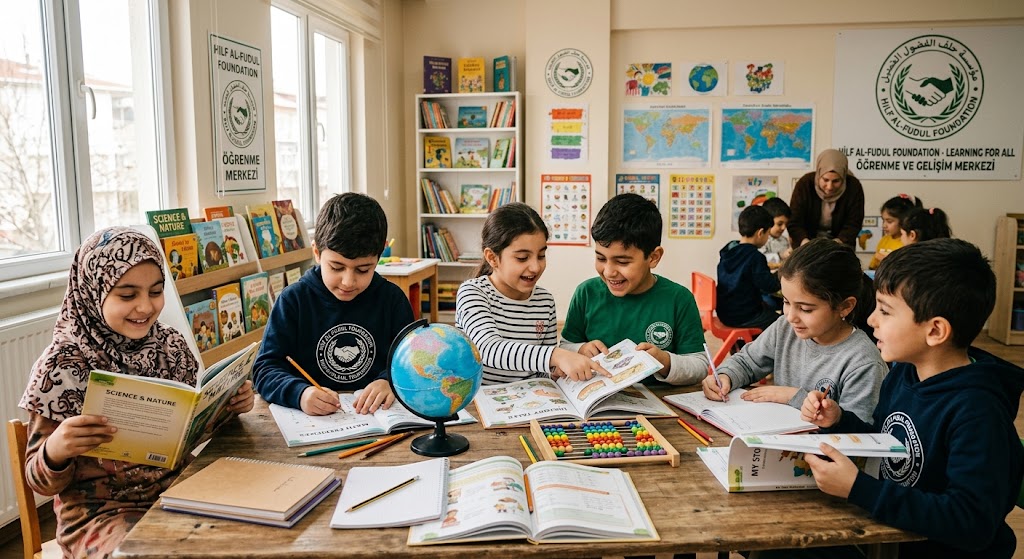
Every child deserves the opportunity to learn, grow, and build a future. Education support can help children overcome barriers to regular schooling. First of all, education gives children knowledge and practical skills. In addition, it can strengthen confidence and encourage long-term goals. Hilf Al-Fudul Foundation supports children through humanitarian programs in different countries. The Foundation works without discrimination based on religion, language, or race. Through donations and volunteering, supporters can contribute to these opportunities.
Why Education Support Matters for Children
Education can influence many parts of a child’s development. It provides knowledge, but its value reaches beyond the classroom. A child who attends school regularly gains opportunities to develop different skills. These skills can later support further education and professional development. However, some children face financial barriers that affect their education. School supplies, uniforms, books, and transportation can create additional challenges. Education support can help reduce some of these barriers.
Support also gives children a stronger sense of continuity. Regular access to learning creates a more stable educational routine. This stability can help children focus on their studies. It can also encourage them to think about longer-term goals. For some children, education becomes a path toward greater independence. For others, it provides a safe environment for social development. Therefore, education support should consider the child’s wider needs.
Education Support Can Create New Opportunities
A child’s educational journey often develops through small, consistent steps. A school bag may seem simple, but it can support daily learning. Books can provide access to lessons and encourage independent study. A scholarship can help a student continue education during difficult circumstances. Each form of support addresses a different part of the educational journey. Together, these contributions can create more stable learning opportunities. Consequently, children can focus more effectively on their education.
Consider a student who wants to continue studying despite financial difficulties. Without proper materials, regular lessons can become more difficult. With appropriate support, the student can attend school with fewer practical barriers. Over time, consistent attendance can strengthen academic habits. The student may then begin considering further education and career options. This example does not promise a specific outcome for every child. However, it shows why access to education can matter greatly.
Success Stories Begin With Opportunity
Every child’s success story develops in a different way. Some students discover their interests through ordinary classroom experiences. Others find motivation through supportive teachers and mentors. Some children need additional assistance before they can participate fully. Education programs can help create these opportunities without defining a child’s future. Instead, they can give children space to discover their own abilities. This approach respects each child’s individuality and personal ambitions.
For example, a supported student may develop a strong interest in science. Another student may discover a passion for languages or literature. Someone else may prefer technology, healthcare, teaching, or skilled professions. These interests can develop through exposure to education and supportive environments. The role of a support program is not to choose the child’s path. Its role is to help create conditions where choices become possible. Ultimately, the child should remain at the center of that journey.
From Education Support to Future Skills
Education should prepare children for more than examinations. It should also help them develop useful skills for everyday life. Communication, problem-solving, teamwork, and critical thinking all have lasting value. These abilities can support children during later educational and professional stages. Therefore, effective education programs should look beyond immediate academic needs. They should also consider the child’s broader development.
As children grow older, their educational needs may change. Younger students may need basic school materials and learning resources. Older students may need scholarships or support for further education. Some may benefit from vocational learning and practical skills. Others may need guidance while considering future academic options. A flexible approach allows programs to respond to these changing needs. This perspective can make educational support more meaningful over time.
The Role of Donations in Children’s Education
Sustainable education programs require reliable resources and responsible planning. This is where donations can make a meaningful difference. Financial contributions can support different educational needs according to priorities. These needs may include school materials, scholarships, or other forms of assistance. Regular contributions can also help organizations plan their programs more effectively. However, every donation should support a clear and responsible purpose. Transparency therefore remains essential in humanitarian work.
A donation does not need to represent a large financial commitment. Different people have different capacities and circumstances. What matters is contributing responsibly and supporting meaningful humanitarian efforts. When many people contribute according to their means, collective support can grow. This principle reflects the wider value of community solidarity. It also allows more people to participate in positive change. In this way, donations can become part of a longer-term educational effort.
Volunteering Adds Time, Skills, and Human Connection
Humanitarian support involves more than financial contributions. Volunteering can also strengthen educational and community programs. Volunteers may contribute their time, professional skills, or organizational abilities. Depending on the program, they may support awareness and educational activities. They can also help communities understand the importance of children’s education. However, volunteering with children requires responsibility and appropriate boundaries.
A good volunteer respects the dignity and privacy of every child. They also understand that every community has different needs. Listening should therefore come before offering solutions. Volunteers should support established programs rather than acting independently. This approach can make volunteer contributions more useful and sustainable. It also protects children from unnecessary exposure or unwanted attention. Ultimately, responsible volunteering strengthens trust within humanitarian work.
How Educational Support Can Shape Communities
The benefits of education can extend beyond individual children. A child who gains knowledge may later contribute to their community. Education can support professional development and broader social participation. It can also help individuals make informed decisions about their future. Over time, these opportunities may strengthen families and communities. This is why supporting children’s education has a wider social value.
Imagine a student who receives consistent educational assistance for several years. The support begins with basic materials and gradually meets changing needs. Later, the student may continue into higher or vocational education. Eventually, that person may use new skills within their community. We cannot predict every child’s future path. Nevertheless, providing opportunity gives children more room to shape that future. This is one of the most important values of educational support.
A Child’s Story Should Focus on Potential
Humanitarian communication requires sensitivity when discussing children’s lives. Stories should never reduce children to hardship or vulnerability. Every child has abilities, interests, dreams, and personal strengths. Therefore, success stories should highlight opportunity rather than create emotional pressure. They should also protect children’s privacy and personal dignity. This approach creates a more respectful understanding of humanitarian support.
At Hilf Al-Fudul Foundation, children remain part of a wider humanitarian mission. The Foundation supports communities through different humanitarian programs. These programs include education, water projects, sacrifice campaigns, and emergency assistance. The Foundation operates across more than 12 countries. Its work aims to reach people without discrimination based on religion, language, or race. Supporters can contribute through donations, volunteering, and responsible community engagement.
Building Success Through Long-Term Support
A successful education program requires more than a single moment of assistance. Children develop over years, and their needs change during that time. Therefore, long-term planning can strengthen the impact of educational programs. Support should respond to practical needs while respecting children’s individual circumstances. Regular evaluation can also help organizations understand changing priorities. This creates a more responsible approach to humanitarian education.
Long-term support can also encourage children to think beyond immediate difficulties. A student may begin with the simple goal of staying in school. Later, that student may develop a larger academic or professional ambition. Progress often happens through many small achievements. Each achievement can build confidence and encourage another step forward. For this reason, educational support should value progress as well as outcomes.
Every Contribution Can Support a Child’s Journey
Children do not need identical paths to achieve meaningful success. Each child has different abilities, interests, circumstances, and goals. What they need is access to opportunities that respect those differences. Education support can help create some of those opportunities. It can provide practical assistance while encouraging children to remain engaged with learning. It can also connect communities with people who want to contribute positively.
Support can take several forms:
- Providing school supplies and learning materials.
- Supporting educational scholarships.
- Contributing to sustainable humanitarian programs.
- Sharing reliable information about children’s educational needs.
- Participating in responsible volunteering opportunities.
- Making regular or one-time donations according to personal capacity.
Each contribution has a different role within humanitarian work. Together, these efforts can strengthen educational opportunities for children. Most importantly, support should always respect dignity and personal privacy. Children deserve opportunities without becoming objects of pity. They deserve encouragement, respect, and the chance to shape their own futures.
The Future Begins With Access to Education
Education can give children knowledge, confidence, and new possibilities. Yet access to education depends on many factors beyond the classroom. Financial conditions, family circumstances, health, and social environment can all matter. Support programs can address some of these barriers through carefully planned assistance. Their success depends on responsible management and continued community participation. Therefore, sustainable education requires both resources and commitment.
Hilf Al-Fudul Foundation continues its humanitarian work across different communities. Its approach brings together education, basic needs, and broader humanitarian assistance. Supporters can become part of this effort through meaningful contributions. A donation can support humanitarian programs according to identified needs. Volunteering can contribute time, skills, and community awareness. In both cases, responsible participation can help create more opportunities.
Conclusion: Supporting Education Means Supporting Possibility
The most meaningful success stories often begin with an opportunity. For a child, that opportunity may start with access to school materials. It may continue through a scholarship, mentorship, or consistent educational support. Over time, these opportunities can help children discover their abilities. They can also encourage children to imagine futures shaped by their own choices. This is why education support remains an important part of humanitarian work.
Every child deserves to be seen for more than their circumstances. They deserve education, dignity, encouragement, and meaningful opportunities. Communities can help create these opportunities through solidarity and responsible action. Hilf Al-Fudul Foundation works to strengthen this spirit across more than 12 countries. Through transparent humanitarian programs, the Foundation connects support with real community needs. Finally, every contribution can become part of a child’s journey toward a more hopeful future.


