

Who Can Receive an Akika Qurban?

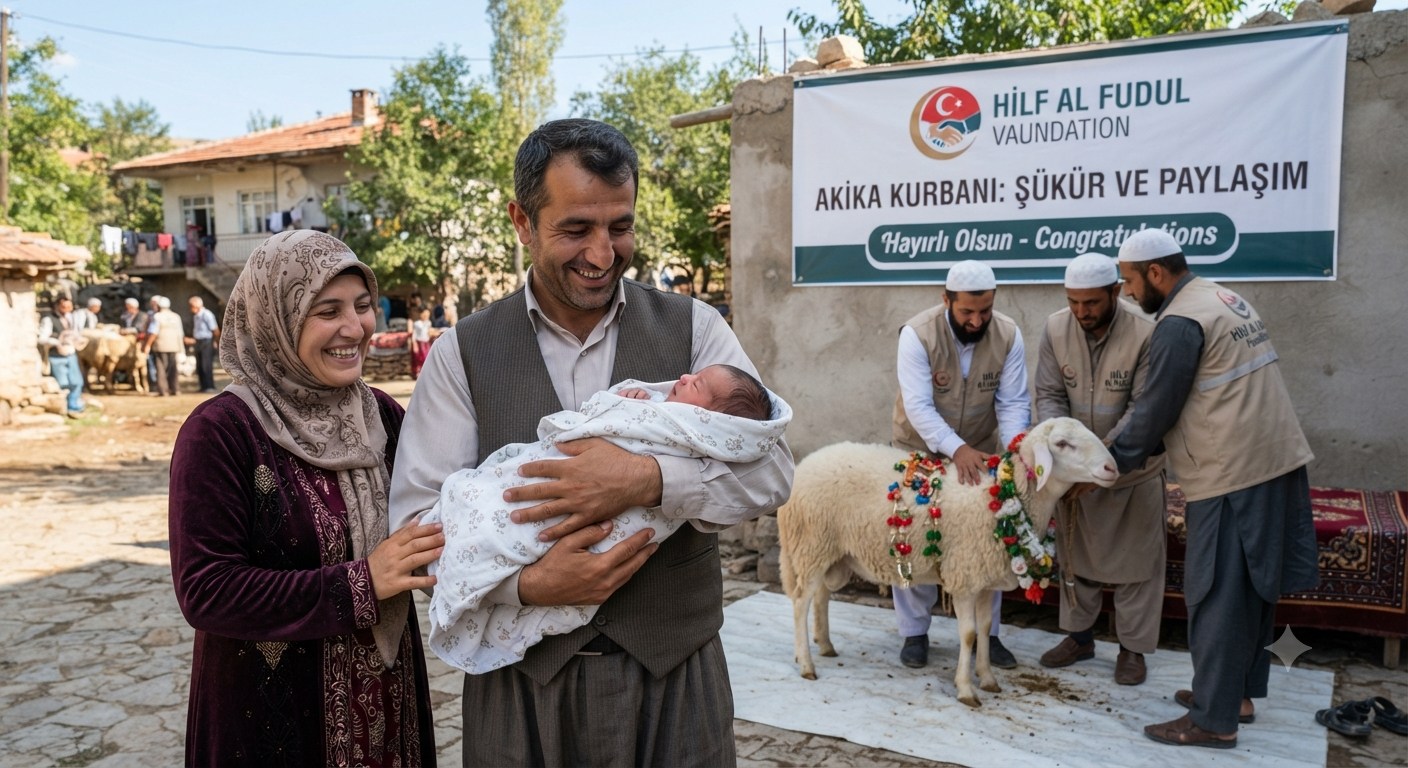
An Akika Qurban is a voluntary act of worship connected with the birth of a child. It gives families an opportunity to express gratitude and share their joy. First of all, understanding its religious meaning helps families make informed decisions. In addition, learning who can receive the sacrifice clarifies the sharing process. Hilf Al-Fudul Foundation supports humanitarian work across more than 12 countries. Through donations and volunteering, the Foundation aims to connect acts of worship with meaningful humanitarian support.
What Is an Akika Qurban?
An Akika Kurban refers to the sacrificial offering made following the birth of a child. Muslims traditionally associate it with gratitude to Allah for the blessing of a new child. The practice has a significant place in Islamic tradition. Families may perform it while celebrating the child’s arrival. They can also share the meat with relatives, neighbors, and people in need. The practice therefore combines gratitude with generosity and community care. Islamic scholars discuss some details of the practice differently across schools of thought.
Who Is the Akika Qurban Offered For?
How Many Animals Are Used for an Akika Qurban?
Traditional Islamic practice commonly mentions different numbers for boys and girls. Two animals are traditionally associated with a boy. One animal is traditionally associated with a girl. However, families may have different financial circumstances and religious considerations. Some scholars discuss these details differently. Therefore, families should avoid treating financial limitations as a barrier to worship. Anyone uncertain about the appropriate practice can consult a trusted Islamic scholar.
When Should an Akika Qurban Be Performed?
Islamic tradition gives particular importance to the seventh day after birth. However, families may not always have the opportunity to perform the sacrifice then. Classical Islamic discussions include later options when the seventh day passes. Therefore, families should not feel unnecessary pressure about a specific date. They can consider their circumstances and their preferred scholarly opinion. The important point involves understanding the purpose of the practice. Families can then arrange the sacrifice according to their religious understanding.
Who Can Arrange an Akika Qurban?
The child’s parents commonly arrange the Akika Kurban. In particular, the father traditionally takes responsibility for arranging it. However, another person may help organize the sacrifice. Families can also authorize a trusted person or humanitarian organization. This option can help families who want to support communities in another region. When giving donations, people should clearly state that their contribution represents an Akika Kurban. This helps the organization understand the purpose of the contribution.
Can an Akika Qurban Be Arranged Through an Organization?
Yes, families can arrange an Akika Kurban through a trusted organization. This option can connect the sacrifice with people who need food support. It can also simplify the process for families living far from vulnerable communities. However, families should research the organization before making a contribution. Transparency matters throughout the process. Donors should understand where the sacrifice takes place and how the meat reaches recipients. A responsible organization should communicate its procedures clearly.
What Should You Check Before Giving an Akika Qurban Donation?
Consider these points before choosing an organization:
Check the organization’s humanitarian activities and mission.
Learn how it manages its donations.
Ask where the sacrifice takes place.
Check whether the organization explains its distribution process.
Look for clear communication about the purpose of your contribution.
Consider whether the organization provides updates after the process.
These steps can help donors make informed and responsible choices.
Who Can Receive Akika Qurban Meat?
Akika Kurban meat can be shared with relatives, neighbors, and people in need. Many families choose to include vulnerable households in this sharing. The practice can therefore extend a family’s joy beyond their own home. For example, a family may arrange an Akika Kurban and ask an organization to distribute the meat. The organization can then connect the contribution with families facing food insecurity. This approach turns a family celebration into an opportunity for community support. Specific religious rules about recipients can vary, so families should seek appropriate guidance.
Can the Family Eat From an Akika Qurban?
Many Islamic scholars allow the family to eat from the Akika Kurban. Families may also share the meat with relatives and neighbors. They can give portions to people experiencing financial hardship as well. The exact rules can differ according to Islamic schools of thought. Therefore, families should follow the opinion they trust. When questions arise, consultation with a qualified religious scholar provides greater clarity. The central values remain gratitude, sharing, and care for others.
Can an Akika Qurban Support People in Need?
An Akika Kurban can become a meaningful form of food support. Families can choose to share the meat beyond their immediate community. Humanitarian organizations can help reach communities facing difficult living conditions. Hilf Al-Fudul Foundation works across different regions through humanitarian programs. Its activities include food support, water projects, education assistance, and emergency aid. Kurban organizations can connect donors with people who need practical assistance. Volunteering can also strengthen these humanitarian efforts.
What Makes an Akika Qurban Meaningful?
The meaning of an Akika Kurban goes beyond the physical act of sacrifice. It represents gratitude for the arrival of a child. It also creates an opportunity to share with others. A family might celebrate a newborn at home while supporting another family elsewhere. That simple connection can give the practice a wider social meaning. However, humanitarian work should always respect the dignity of recipients. Support should avoid portraying people in need through exaggerated or emotional narratives. Responsible giving focuses on respect, transparency, and genuine needs.
Akika Qurban and Volunteering: How Are They Connected?
An Akika Kurban begins with a family’s religious intention. Humanitarian participation can extend the spirit of sharing into the wider community. Volunteering offers another way to support people beyond financial contributions. Volunteers can assist humanitarian organizations with communication and community activities. They can also help raise awareness about responsible giving. Not everyone can contribute financially at the same level. Time, skills, and community support can also strengthen humanitarian programs.
Frequently Asked Questions About Akika Qurban
Is Akika Qurban obligatory?
Akika is generally understood as a recommended practice rather than an obligatory act. Scholars discuss its religious status with some differences. Families can therefore seek guidance according to their school of thought.
Can an Akika Qurban be performed for a girl?
Yes. Islamic tradition includes Akika for both girls and boys. Traditional sources commonly associate one animal with a girl and two with a boy.
Can an Akika Qurban be performed for a boy?
Yes. Families can perform an Akika Kurban for a newborn boy. Traditional practice commonly associates two animals with a boy.
Can I arrange an Akika Qurban outside my country?
Families may use humanitarian organizations to arrange sacrifices in other regions. However, they should consider the religious guidance they follow. They should also check the organization’s procedures before contributing.
Can I give money instead of performing an Akika Qurban?
A financial contribution does not necessarily replace the religious act of sacrifice. Families should distinguish between an Akika Kurban and ordinary charitable donations. When uncertain, they should consult a qualified religious authority.
Can someone else perform the Akika Qurban on my behalf?
Families can authorize another person to arrange the sacrifice. A trusted organization may also manage the process through authorization. The donor should clearly communicate the purpose of the contribution.
Why Does Transparency Matter in Akika Qurban Organizations?
Trust plays an important role when families use an organization for their sacrifice. Donors deserve clear information about how their contribution supports the intended activity. Organizations should communicate their areas of operation honestly. They should also explain how they organize sacrifice and distribution activities. Clear communication helps donors understand the humanitarian impact of their contribution. It also protects the dignity of the people receiving assistance. For Hilf Al-Fudul Foundation, responsible humanitarian work begins with respect and transparency.
Akika Qurban as a Tradition of Gratitude and Sharing
An Akika Kurban connects the celebration of a child’s birth with gratitude. It can also create an opportunity to share food with others. Families may include relatives, neighbors, and people facing hardship in this process. Humanitarian organizations can help extend this sharing to communities farther away. In this way, a personal family occasion can support a wider culture of solidarity. The practice does not depend on dramatic gestures or exaggerated promises. Instead, it emphasizes gratitude, generosity, and thoughtful support.
Conclusion: An Akika Qurban Can Become a Shared Act of Gratitude
An Akika Kurban carries religious and social meaning for many Muslim families. Families traditionally perform it following the birth of a child. They can share the meat with relatives, neighbors, and people in need. Religious details may vary, so families should follow reliable scholarly guidance. When using an organization, transparency and responsible distribution also matter. Hilf Al-Fudul Foundation connects humanitarian work with values of dignity and solidarity. Through donations and volunteering, individuals can contribute to wider humanitarian efforts.
Donate / Volunteer: /make-a-donation/ · /become-volunteer/


