
Water Well Donation: Where Is It Needed Most?

Water is one of the most basic needs of every community. Yet, millions still lack safe and reliable drinking water. In fact, WHO and UNICEF reported that 2.1 billion people lacked safely managed drinking water in 2024. Therefore, water access remains a global humanitarian priority. Water well donation can support communities that struggle to reach reliable water sources. Moreover, Hilf Al-Fudul Foundation supports humanitarian projects without discrimination based on religion, language, or ethnicity. First of all, effective water well projects require careful assessment of local needs. Consequently, sustainable support can create benefits that extend far beyond access to water.
Why Do Water Well Projects Matter?
Water affects almost every part of daily life. People need it for drinking, cooking, cleaning, and hygiene. Families also depend on water for livestock and small-scale agriculture. When reliable sources remain far away, people spend valuable time collecting water. Women and girls often carry a significant share of this responsibility. UNICEF and WHO highlight how water collection can affect education and daily opportunities. Furthermore, unreliable water sources can increase health risks.
The global picture shows both progress and continuing inequality. WHO and UNICEF reported major improvements between 2000 and 2024. However, progress has not reached every community equally. Low-income countries and vulnerable rural communities continue to face serious gaps. In addition, climate change increases pressure on already limited resources. Therefore, water projects should address both immediate and long-term needs.
Where Is Water Well Donation Most Needed?
Water needs differ greatly between countries and communities. Some areas face prolonged drought and declining groundwater levels. Others struggle because conflict damages infrastructure and disrupts services. In some regions, rapid population growth places additional pressure on limited resources. Consequently, no single country represents every aspect of the global water crisis. Still, several regions face particularly severe challenges.
UNICEF identifies the Middle East, North Africa, and South Asia among regions with major child exposure to water scarcity. In 2022, 436 million children faced extreme water vulnerability. UNICEF identified Niger, Jordan, Burkina Faso, Yemen, Chad, and Namibia among countries with particularly high exposure. These findings show why targeted water investments matter.
Niger, Burkina Faso, and Chad
The Sahel region faces complex water challenges. Niger, Burkina Faso, and Chad experience pressure from drought and climate variability. Rural communities can face additional difficulties when infrastructure remains limited. Families may depend on distant or unreliable water sources. Livestock and agricultural activities also depend heavily on available water.
Water well projects can support these communities when local conditions allow. However, organizations should first assess groundwater availability and quality. They should also consider population size and expected water demand. In addition, local communities should participate in managing new water points. This approach can strengthen long-term sustainability.
UNICEF’s analysis identified Niger, Burkina Faso, and Chad among countries with particularly high child exposure to extreme water vulnerability. Therefore, these countries remain important examples when discussing global water needs.
Yemen and Water-Stressed Middle Eastern Communities
The Middle East faces some of the world’s most serious water challenges. Yemen represents a particularly complex example. Water scarcity combines with conflict, displacement, infrastructure damage, and economic pressure. UNICEF notes that water scarcity in the region affects health, nutrition, agriculture, and displacement.
These challenges make reliable water infrastructure especially important. A functioning well can support families in communities with limited alternatives. However, organizations must consider security and technical conditions before starting projects. They should also plan for maintenance and water quality monitoring.
Yemen also appears among the countries with very high child exposure to extreme water vulnerability. For this reason, water assistance can form an important part of broader humanitarian support.
Somalia, Ethiopia, and Kenya
The Horn of Africa also experiences recurring water challenges. Drought can reduce available water for communities and livestock. Climate variability can make traditional water sources less reliable. In rural areas, families may therefore depend on groundwater and community water points.
A water well can make daily life more manageable when it reaches a safe and sustainable source. Children may spend less time collecting water. Families can use their time for education, work, and household activities. Livestock owners may also gain more reliable access to essential water.
However, every location requires a separate assessment. Groundwater conditions can vary significantly between nearby communities. Therefore, responsible organizations should avoid treating every project as identical.
Water Scarcity in North Africa and the Middle East
North Africa and the Middle East face particularly intense water stress. UNICEF describes the region as one of the world’s most water-stressed areas. Agriculture, population growth, climate change, poor water management, and conflict all contribute to pressure on water resources.
These challenges require more than simply creating new water points. Communities also need better water management and resilient infrastructure. Humanitarian organizations can support this wider effort through targeted projects. Moreover, local knowledge can help identify the most appropriate solutions.
The same principle applies to every water well project. A successful project should answer a real community need. It should also consider technical feasibility and long-term maintenance. In other words, a well should become a sustainable resource rather than a short-term intervention.
What Makes a Water Well Project Sustainable?
Opening a well represents only one part of a successful project. Before construction, organizations should examine several important factors:
- Local water demand and population size
- Groundwater availability and expected yield
- Water quality and contamination risks
- Distance from existing water sources
- Community participation and local management
- Maintenance and long-term sustainability
- Local environmental and security conditions
WHO emphasizes the importance of water safety planning and risk-based management. Therefore, organizations should consider water quality alongside access.
Transparency also matters. Donors deserve clear information about how their support contributes to humanitarian work. At the same time, communities deserve respectful and responsible assistance. Donation should therefore connect with genuine needs and carefully planned projects.
How Can a Water Well Donation Create Lasting Impact?
A Su kuyusu bağışı can contribute to a practical humanitarian solution. Its impact, however, depends on responsible planning. Organizations should identify communities with genuine need. They should assess local water conditions before starting a project. They should also consider how communities will use and maintain the water source.
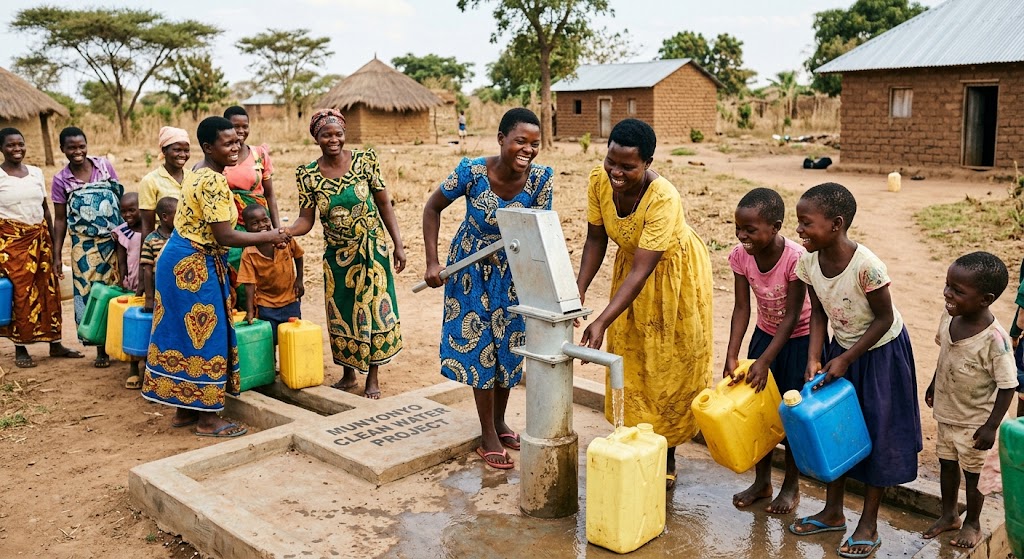
The benefits can extend beyond drinking water. Reliable water can support household hygiene and food preparation. It can also reduce the time families spend searching for water. Children may gain more opportunities to attend school regularly. Women and girls may face less pressure from daily water collection.
A single project cannot solve the global water crisis. Nevertheless, it can respond to a specific community’s needs. This distinction matters because responsible humanitarian work focuses on realistic and measurable outcomes. Consequently, every project should begin with a clear understanding of local conditions.
The Role of Donation and Volunteer
Humanitarian work depends on cooperation. Financial support can help organizations develop and implement water projects. At the same time, volunteer can increase awareness of global water challenges. Volunteers can share reliable information and encourage responsible solidarity.
Support does not need to focus only on statistics. Behind every water-access challenge, real families manage daily responsibilities. A child who spends less time collecting water may have more time for school, a family with reliable water can plan daily activities more effectively, afarmer may protect livestock when a dependable water source becomes available.
These examples show why water projects deserve careful attention. They connect basic infrastructure with daily human needs. Moreover, they can strengthen community resilience when organizations plan them responsibly.
How Hilf Al-Fudul Foundation Approaches Water Projects
Hilf Al-Fudul Foundation works with a humanitarian approach that respects human dignity. The Foundation supports people without discrimination based on religion, language, or ethnicity. Its humanitarian activities include water wells, food assistance, education support, and emergency aid.
Water projects form an important part of this wider approach. The goal goes beyond providing temporary relief. Sustainable water access can support healthier and more stable communities. Therefore, project planning should focus on actual needs and local conditions.
Transparency remains equally important. Donors should understand the purpose of their support. Communities should receive assistance that respects their dignity. Ultimately, humanitarian work becomes stronger when compassion meets responsibility.
Why Sustainable Water Access Matters for the Future
The global water challenge will require long-term cooperation. Climate change can increase pressure on already vulnerable water resources. Population growth can also increase demand. At the same time, conflict can damage essential infrastructure.
WHO and UNICEF’s latest monitoring shows that 2.1 billion people still lacked safely managed drinking water in 2024. This figure demonstrates the scale of the remaining challenge. Nevertheless, progress remains possible through investment, cooperation, and responsible water management.
First, organizations should identify communities with the greatest needs. Next, they should assess suitable water solutions. Then, they should involve local communities in project management. Finally, they should monitor sustainability and water safety.
Conclusion: Supporting Access to Safe Water
Water access represents much more than a basic infrastructure issue. It affects health, education, hygiene, livelihoods, and community resilience. Regions across Africa, the Middle East, and South Asia continue to face serious water challenges. UNICEF’s data shows particularly high vulnerability among children in several countries.
A responsible water well donation can support a carefully planned local solution. Yet sustainable impact requires more than drilling a well. It requires assessment, water safety, community participation, and long-term planning. In addition, transparent humanitarian work helps build trust between donors and communities.
Hilf Al-Fudul Foundation aims to support people in need with dignity and compassion. Through water projects and other humanitarian activities, the Foundation seeks to contribute to practical and sustainable solutions. Ultimately, access to safe water can help communities build a more secure future.
Donate / Volunteer: Support Hilf Al-Fudul Foundation’s humanitarian work through Make a Donation or Become a Volunteer.


